Global multi-tenant leadership platform — US Dept of State / EDSA
Twin Mentorship
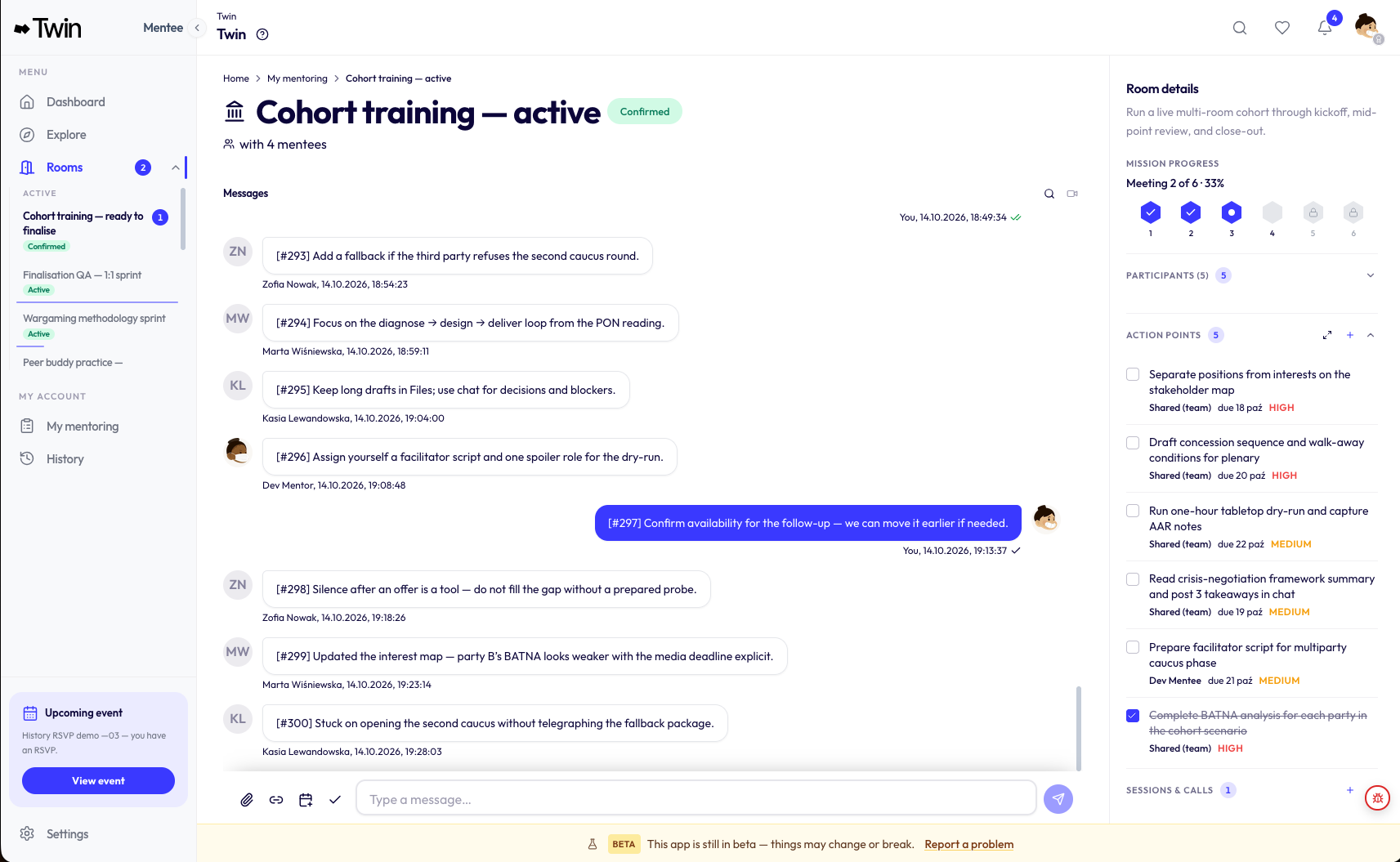
A secure international mentorship ecosystem supporting leadership development programs across five European countries (EDSA): landing, mentee/mentor apps, admin, and NestJS API.
- Stack
- NestJS, TypeORM, PostgreSQL, React, Vite
- Surface
- Landing, internal app, admin panel, API
- Mode
- Multi-tenant product partnership
- Cadence
- Iterative, reviewable increments
Twin Mentorship overview
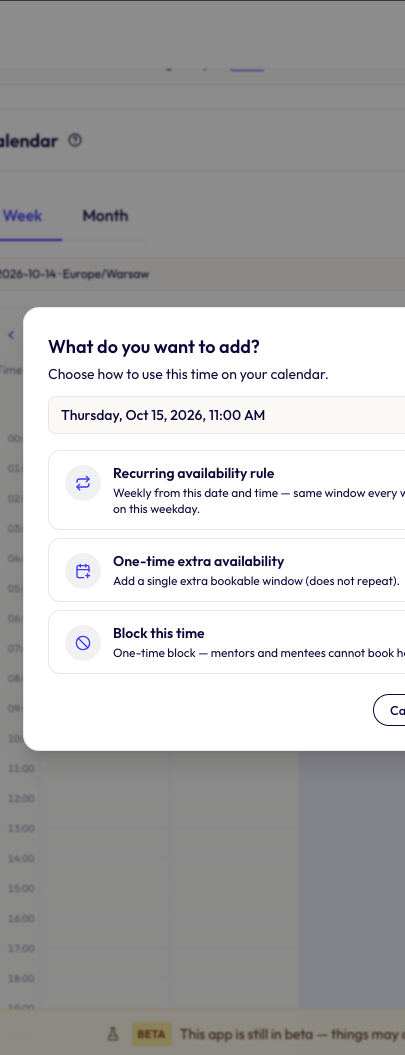
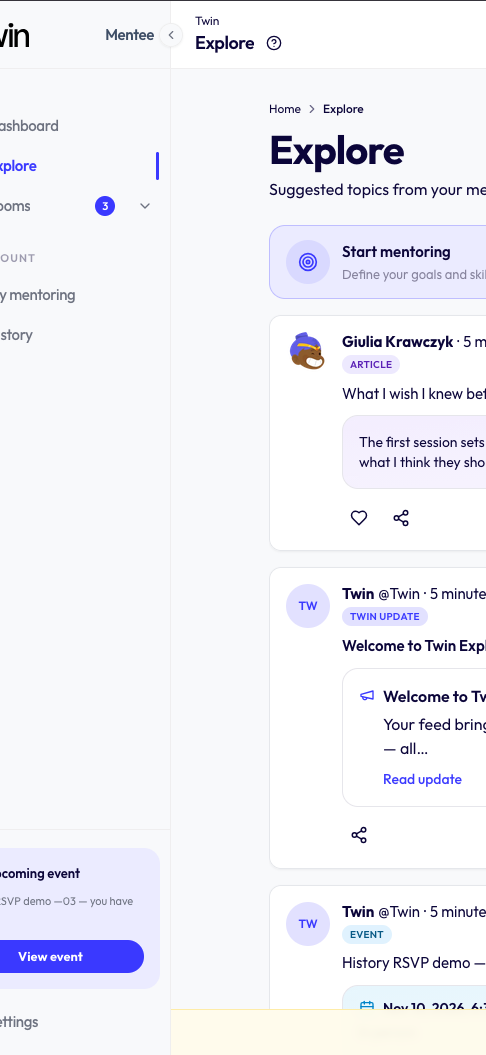
Twin is a mentorship platform that connects mentees, mentors, and administrators in one product ecosystem: public landing, internal user app, admin panel, and a backend API for core workflows.
The goal is a measurable mentoring journey — from first contact and onboarding, through matching and mission execution, to communication, progress tracking, and operational reporting across five European program countries (EDSA / US Dept of State).
What the product consists of
A monorepo of cooperating applications:
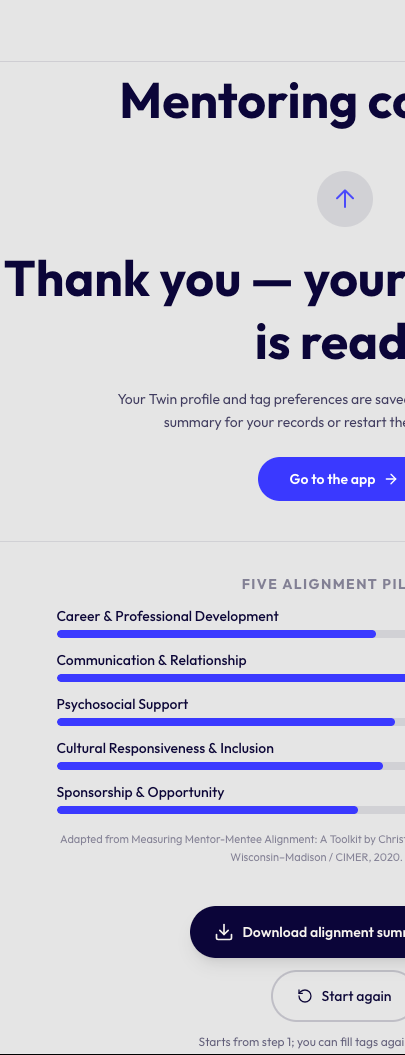
- Landing (`web/`) — Vite + React marketing site with localized content, access requests, and mentoring compass flow.
- Admin (`admin/`) — Vite + React panel for operations, content, and platform administration.
- API (`api/`) — NestJS with TypeORM and PostgreSQL for domain logic, auth, integrations, and data consistency.
- Scripts — automation for local setup, database workflows, and repeatable developer operations.
Together: acquisition, onboarding, matching, execution, and governance in one end-to-end product.
Twin Mentorship was built and iterated quickly with a small, high-output team. Every release tested market response and informed product decisions with real feedback.

How we build with the client
A collaborative product-engineering partnership — not a throw-over-the-wall handoff.
- Shared discovery and prioritization — requirements refined against business outcomes and realistic milestones.
- Iterative delivery — small, reviewable increments so direction is validated early.
- Joint decisions — architecture, UX, and scope trade-offs explained in business terms.
- Quality by default — code review, linting, tests, and environment validation before release.
- Feedback loop — stakeholder and production insights continuously reshape the backlog.
Collaboration principles
- Single source of truth for requirements and acceptance criteria.
- Clear ownership with shared context across product, design, and engineering.
- Documentation where it adds value — especially domain decisions and operational workflows.
- Continuous improvement in both the product and the delivery process.
Twin is built through ongoing collaboration between our team and the client — strategic product thinking with disciplined software delivery.