
AI-driven energy management — predictive OT/IT control
Adaptive EMS
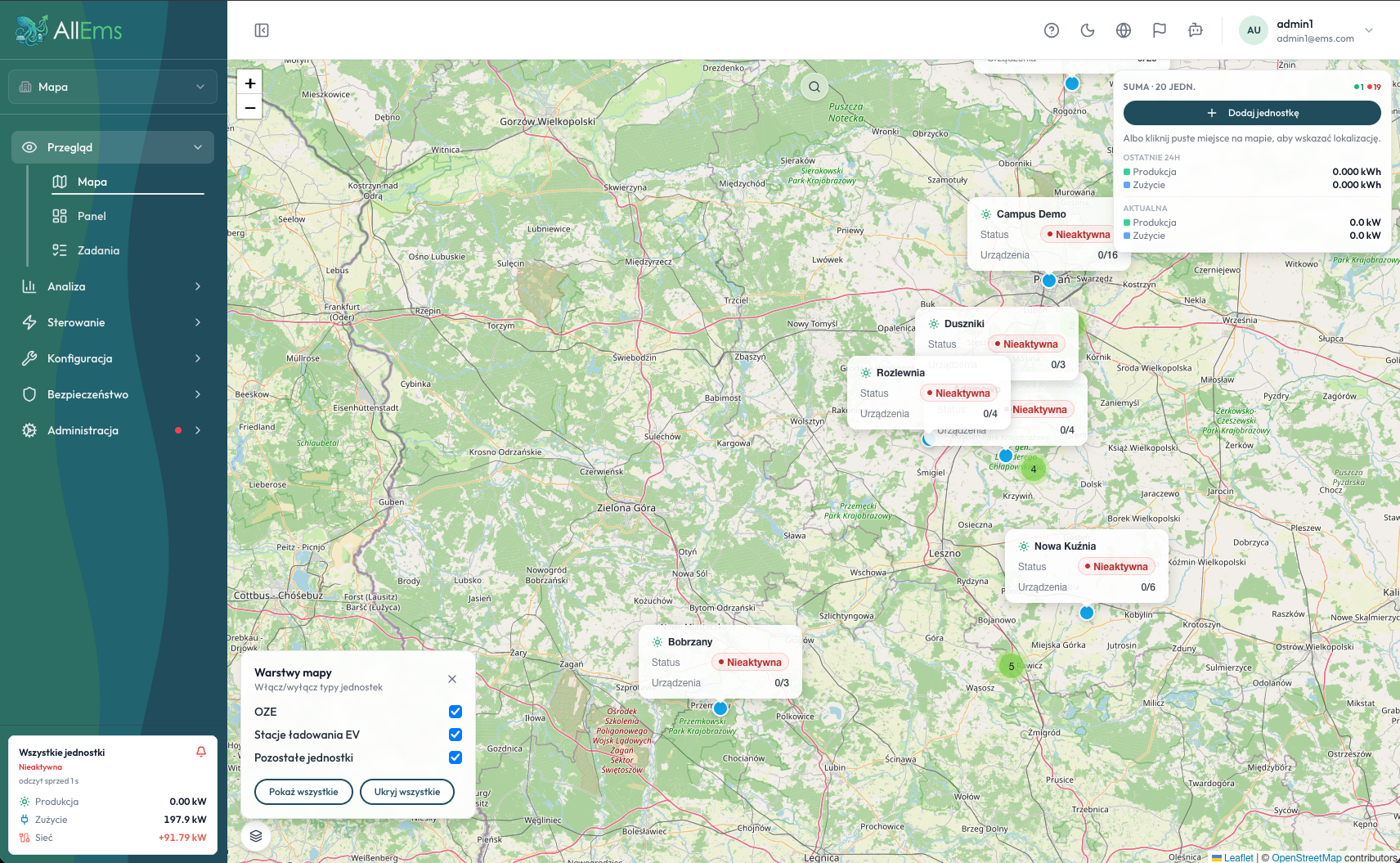
An adaptive energy management system for industrial sites and renewables: real-time telemetry, multi-protocol OT integrations, and ML models that optimize production and consumption.
- Stack
- Microservices, Docker, Redis, PostgreSQL
- Protocols
- MQTT, OPC UA, Modbus TCP/RTU, HTTP
- Intelligence
- Forecasting, anomaly detection, optimization
- Deployment
- On-prem, edge, private/public cloud
Adaptive energy management
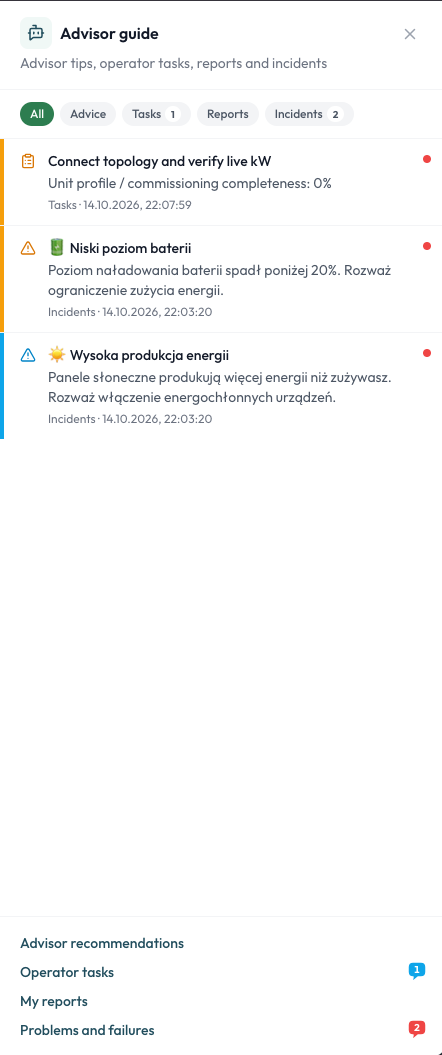
An EMS platform for industrial facilities, renewables, aggregators, and modern infrastructure. Real-time monitoring, intelligent automation, predictive analytics, and multi-protocol OT integration in one scalable ecosystem.
Key capabilities
Real-time data processing
Telemetry from thousands of devices — PV, battery storage, wind, cogeneration, meters, PLCs, and industrial controllers — processed continuously.
Multi-protocol communication
Native MQTT, OPC UA, Modbus TCP/RTU, HTTP APIs, raw TCP, and custom industrial integrations for seamless fit with existing plant assets.
High availability
Distributed buffering (Redis + PostgreSQL fallback), retries, and failover so operations continue even during SCADA or network outages.
Scalable microservices
Docker-based, horizontally scalable services — on-premise, edge, or private/public cloud.
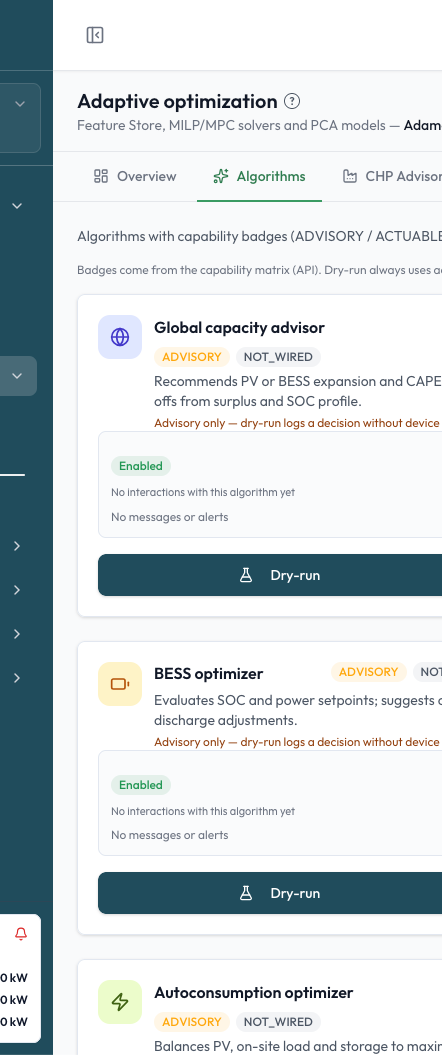
AI & predictive analytics
Machine learning for consumption optimization, production forecasting, anomaly detection, and operational decisions.
Multi-tenant & SaaS-ready
Secure isolation for multiple organizations, plants, or clients in one environment.
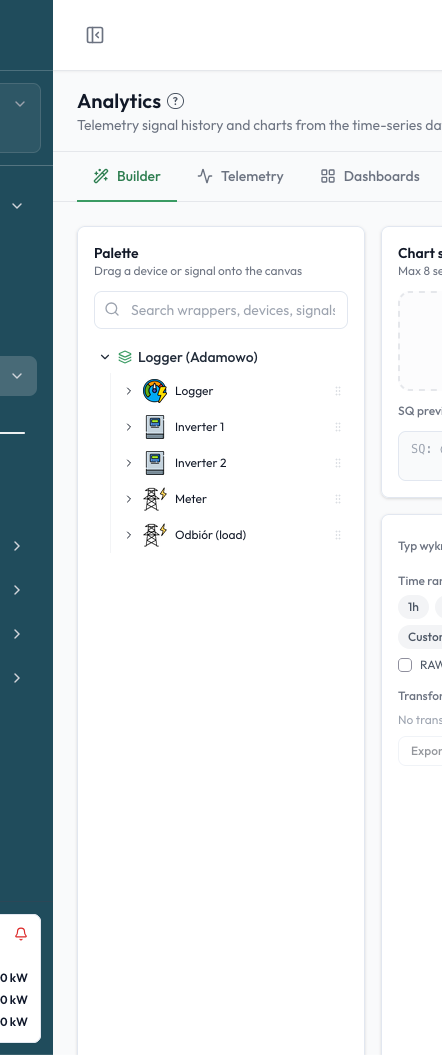
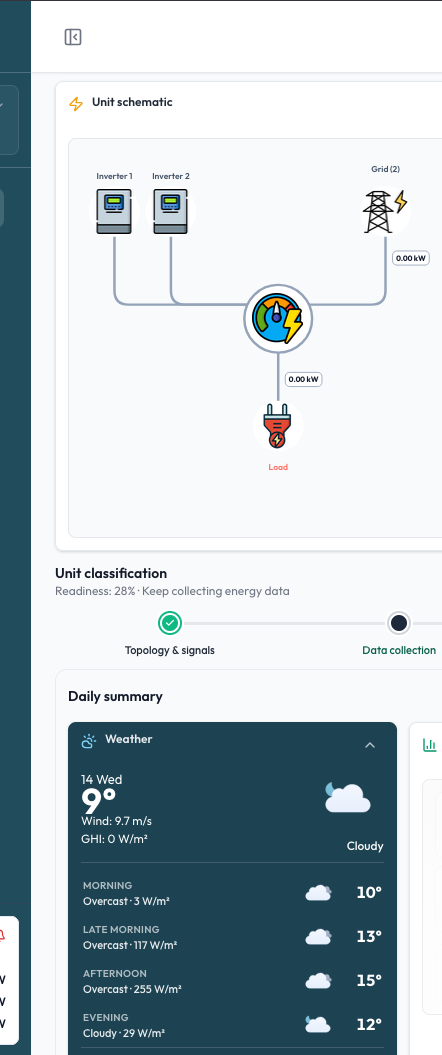
Dashboards & reporting
Configurable KPIs, alarms, historical trends, and reports tailored to each site’s operating model.
We stepped in to solve an operational bottleneck and became the key integrator between ERP and multiple power plants. Data flow and core processes finally stayed in sync.
Client cooperation process
- Discovery & business analysis — processes, infrastructure, and measurable outcomes.
- Infrastructure & integration planning — SCADA, devices, energy assets, and protocols.
- System design & customization — dashboards, automation logic, roles, and integrations.
- Deployment & configuration — client infrastructure or dedicated cloud, with security policies.
- Testing & validation — end-to-end signals, load tests, and operational simulations.
- Training & launch — technical and operational handover into production.
- Continuous development — new features, AI improvements, and regulatory adaptation.
Approach
Technology with a business-first mindset: measurable operational value, better energy efficiency, higher reliability, and long-term digital transformation — not software for its own sake.